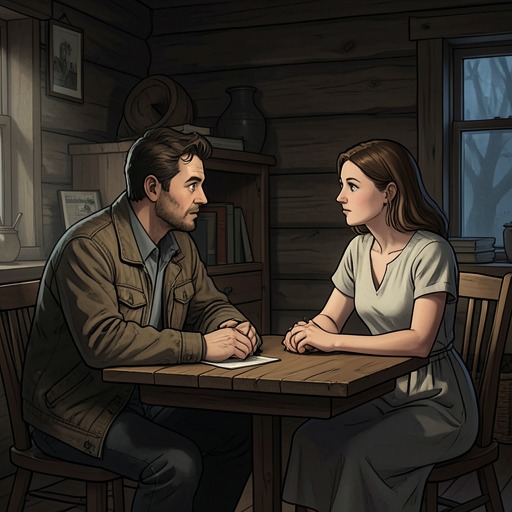
Cemetery of Roses
Love in the Time of CholeraThe Cemetery of Roses is the burial ground where Florentino Ariza lays his mother, Tránsito Ariza, and where the graves of the two women he has lost become joined by rosebushes he plants and tends. First known as the Cholera Cemetery, it acquires its memorable name through the uncontrolled growth of those flowers; later, a municipal sign renames it Universal Cemetery. Its changing names hold together private grief, popular memory, and the city’s recurring effort to impose official order on the past.
Setting and Earlier Names
The cemetery occupies the former Hand of God ranch, a place already associated with cholera: it is still known as the Cholera Cemetery when Florentino buries Tránsito there. The name locates the burial ground within a wider landscape in which epidemic history remains attached to places and everyday memory, rather than confined to official accounts.
The Cemetery of Roses is not its formal name at first. The new name arises from what grows among the graves, while Universal Cemetery arrives later through a sign installed by a mayor. The successive names register different kinds of authority: the inherited memory of disease, a popular description rooted in the visible landscape, and an official designation imposed from above.
Tránsito Ariza’s Grave and the Roses
Shortly before her death, Tránsito distributes the gold and jewels hidden in jars beneath her bed to neighborhood children, telling them they can eat the treasures like candy. Some of the valuables cannot be recovered. Florentino buries her at the former Hand of God ranch and plants a rosebush on her grave, giving his mourning a continuing, practical form: he returns to the cemetery and tends a living marker beside the dead.
During his visits, Florentino discovers that Olimpia Zuleta is buried nearby. Her grave has no tombstone; her name and the date are written in the fresh cement of the crypt. He is horrified by the thought that this may be a cruel joke by Olimpia’s husband. When the roses bloom, Florentino leaves a flower on her grave whenever no one is watching, then plants a cutting from his mother’s rosebush there as well. The paired plantings link the two graves through his private acts of remembrance without erasing the distinct circumstances of their deaths.
The two rosebushes flourish so profusely that Florentino brings shears and other gardening tools to control them, but the effort fails. Within a few years they have spread among the graves like weeds. What begins as care for two particular dead women thus alters the appearance of the burial ground itself: the cemetery’s popular name grows out of an intimate memorial that escapes its original boundaries.
Public Memory and Renaming
Once the roses have overtaken Florentino’s attempts to prune them, the unadorned burial ground becomes known as the Cemetery of Roses. The name is not presented as a formal dedication or a decision by the authorities; it emerges from popular usage and from a landscape reshaped by repeated acts of private care. The cemetery’s identity is therefore produced by the people who visit and remember it as much as by the signs that designate it.
A mayor eventually clears out the roses one night and hangs a sign reading Universal Cemetery from the entrance arch. The replacement removes the visible growth that had given the place its familiar name, but it cannot undo the memories attached to the graves or the years in which the flowers spread. The change contrasts administrative naming with the accumulated force of local usage: an official label can alter what the cemetery is called, even as its history remains bound to the roses and the Cholera Cemetery of earlier memory.
Time, Routine, and Significance
The cemetery is part of Florentino’s Sunday routine after his mother’s death. That routine helps protect him from awareness of his age, but the graveyard also becomes the setting in which time catches up with him. On a December Sunday, after the rosebushes have defeated his garden shears, he sees swallows on newly installed electric wires and realizes how long it has been since Tránsito died, since Olimpia was murdered, and since Fermina Daza sent him a letter promising that she would always love him. The cemetery’s overgrown roses, like its changing names, make elapsed time difficult to keep at a distance.
The place also belongs to a broader landscape of memory: the city’s celebrated past is itself described as an illusion shaped by recollection, and the ruined Cartagena de Indias seen from the balloon is a city abandoned during cholera panic, with its history preserved in a landscape of decay. Against these larger, civic remnants, the Cemetery of Roses gives memory a more intimate scale. It holds the consequences of particular losses while showing how private remembrance can become shared custom—and how that custom, too, may later be cleared away or renamed.